Every day, cities across the globe bury or burn huge piles of plastic waste. That same waste could turn into fuel, useful materials, and steady cash flow instead. Suppose you run a waste management business, own a recycling yard, or just spot the green-tech investment trend rolling in. Then a pyrolysis plant gives you one of the smartest ways to flip that headache into real money. Out of the solid choices on the market today, the 20T Semi Continuous Waste Tyre(Plastic) Pyrolysis Plant really shines. It handles both waste plastic and tires in the same setup. It keeps running smoothly day after day. Plus, it delivers high-value products at surprisingly low operating costs.
Plastic waste piles up fast these days. Landfills overflow with it. Oceans choke on it. And governments keep tightening the rules. Yet that very waste holds real energy inside. Pyrolysis heats the material without any oxygen around. It breaks the long polymer chains into shorter hydrocarbons. You end up with liquid fuel, solid carbon black, and gas you can sell or burn right on site.
This approach beats old incineration or simple landfilling for one big reason. The numbers actually work. Many operators get paid to take the feedstock. Producer-responsibility laws in Europe, parts of Asia, and even growing programs in the U.S. make manufacturers and importers pay tipping fees. So your raw material cost can drop to zero. Sometimes it even turns negative. At the same time, the end products sell for steady prices in real markets.
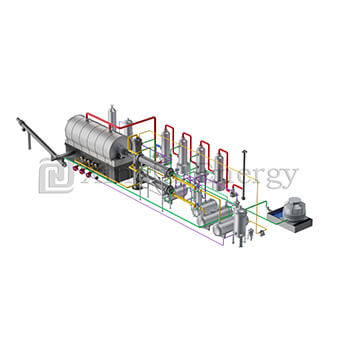
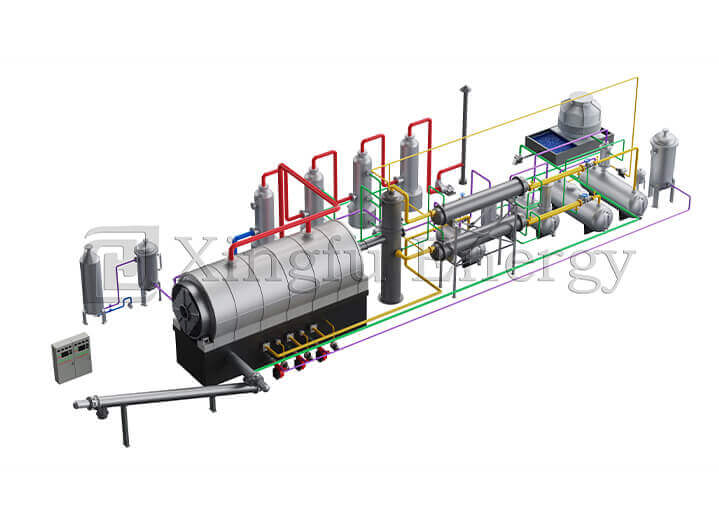
This machine sits in a sweet spot. It is not a small batch unit you shut down every few hours. It is also not a giant fully continuous line that needs perfect feedstock around the clock. The 20T Semi Continuous Waste Tyre(Plastic) Pyrolysis Plant processes 20 tons per day. It works at normal pressure and reaches up to 650 °C. Hot-air circulation keeps energy costs down.
Here is a quick look at the key specs:
| Parameter | Detail |
| Model | XFLJ–20 |
| Daily capacity | 20 tons |
| Typical recovery | Oil 40-45%, Carbon black 32-36%, Steel wire 14-16%, Syngas 5-8% |
| Labor needed | 3–4 people per shift |
| Power draw (running) | 75 kW/h |
| Floor space | About 250 m² |
| Installation | Integral skid design—no poured foundation required |
The plant takes pre-shredded tires up to 50 mm or plastic pieces. You feed material steadily while the reactor stays hot. Then you discharge the slag without cooling everything down. That hybrid style means fewer start-stop cycles. Heat loss stays low. Daily throughput runs higher than pure batch systems.
Multilevel condensers pull out more oil. The closed-loop slag system keeps dust out of the air. Operators in real plants say the runs feel smooth after the first learning curve passes.
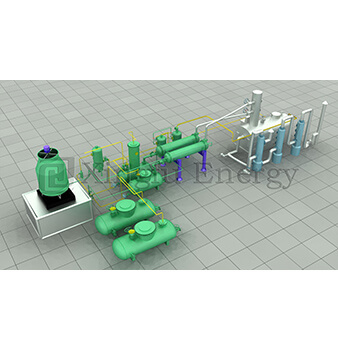
Picture a normal shift. Shredded plastic or tire chips ride a conveyor into an airtight feeder. Inside the reactor, heat turns the material into vapor. That vapor moves to a gas-liquid separator. Next it passes through condensers and cools into pyrolysis oil. The leftover solids—carbon black mixed with steel wire from tires—drop into a cooling hoist. A magnetic separator splits the steel wire out. You bale it and sell it as scrap. The carbon black goes for sale as-is or gets milled finer for better prices. Any non-condensable gas gets scrubbed and fed back into the hot-air furnace. It keeps the reactor warm. The whole loop wastes almost nothing.
The same line handles both tires and plastics. You can switch feedstocks whenever one becomes cheaper or more plentiful in your area. No need for separate machines.
Smart operators never rely on just one product. The 20T Semi Continuous Waste Tyre(Plastic) Pyrolysis Plant opens up four solid income sources:
Add in the syngas you burn on site. That cuts your own fuel bill. The numbers stack up fast. One real waste-plastic pyrolysis project hit an ROI of 1,610.7% with an internal rate of return over 1,000%. Those figures come from low feedstock costs, strong product prices, and efficient daily operation.
Payback periods in well-run plants often land between 12 and 24 months. Local oil and carbon black prices make the difference. After that, the plant keeps generating profit for the rest of its 5- to 7-year life with basic maintenance.
Full batch systems cost less at first. But they lose money on downtime and extra labor. Fully continuous lines cost more upfront. They also demand perfect feedstock consistency and can act finicky during startup. The semi-continuous design hits the right balance. You feed and discharge steadily without the heavy automation of round-the-clock systems. Most days you run 20–22 hours, do quick maintenance, and keep going. The integral build means faster installation and lower civil-engineering costs. No huge concrete pads needed.
The environmental side looks good too. The system runs at normal pressure with steam-based flame retardation. Closed feeding and slag discharge keep emissions low. Many owners meet tough local air-quality rules without expensive extras.
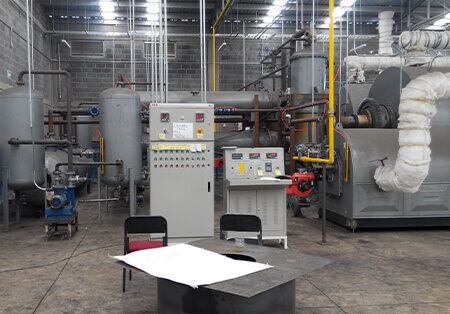
Take a setup in Mexico. Two 10-ton lines work together as a 20-ton semi-continuous plant. It has run reliably with full syngas treatment. The operator switches between tire and plastic feedstock depending on seasonal supply. Output stays consistent. Cases like this prove that once the plant is up and running, daily work becomes routine. Even teams new to pyrolysis get the hang of it quickly.
The company behind these systems is Qingdao Xingfu Energy. It is a high-tech manufacturer based in Qingdao, China. Since 2010 they have focused on industrial boilers, pressure vessels, and waste-tire and plastic pyrolysis equipment. Their 70,500-square-meter facility employs 228 people. That includes 28 engineers and 65 certified welders. All plants carry CE and ISO9001 certifications. The company also holds A-level boiler-maker and pressure-vessel licenses. Products have shipped to more than 30 countries, from Southeast Asia to Europe. They have built a name for solid engineering and quick after-sales support.
Turning waste plastic into profit is no longer some far-off idea. It is a working business model with proven equipment, steady markets, and strong returns. The 20T Semi Continuous Waste Tyre(Plastic) Pyrolysis Plant gives you the right capacity, flexibility, and efficiency to make it happen. You do not have to bet everything on unproven tech. Whether you handle tires, plastics, or both, the revenue streams stay clear. Operating costs stay manageable. The environmental upside feels real.
If you are serious about joining the circular economy or growing your waste operation, this investment checks every box. It offers technical reliability, solid economic upside, and a real-world track record you can trust.
It handles 20 tons per day of pre-shredded waste tires up to 50 mm or plastic waste. The same reactor line switches easily between the two. So you can chase whichever material costs less or shows up more in your area.
Many plants reach break-even within 12 to 24 months. One well-documented waste-plastic project hit an ROI of 1,610.7% and an IRR above 1,000%. Low feedstock costs and strong sales of oil and carbon black made it happen.
You get pyrolysis oil (40–45%), carbon black (32–36%), steel wire (14–16% from tires), and syngas (5–8%). Oil goes to industrial fuel users or refiners. Carbon black heads to rubber and pigment makers. Steel wire sells to scrap yards. Syngas powers the plant itself and cuts your fuel bill.
Not at all. It needs only 3–4 operators per shift. It runs at normal pressure with straightforward controls. The integral design and closed systems keep maintenance simple. Most owners say it runs steady after the first month of fine-tuning.
You skip the long cooldowns of batch systems. You also avoid the high capital cost and picky feedstock needs of fully continuous lines. The result is higher uptime, lower energy use, and faster payback. That is exactly what investors want in today’s waste-to-energy market.
 Address: 30th Floor, Building 3, Excellence Darongcheng, Shibei District, Qingdao City, Shandong Province
 Call us now:+86-13791972057
 Email:[email protected]


QINGDAO XINGFU ENERGY EQUIPMENT CO.,LTD