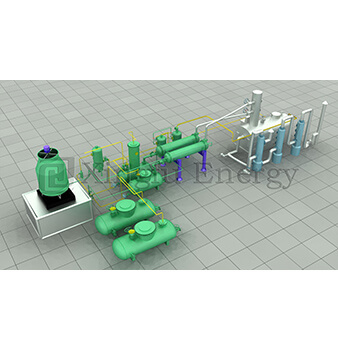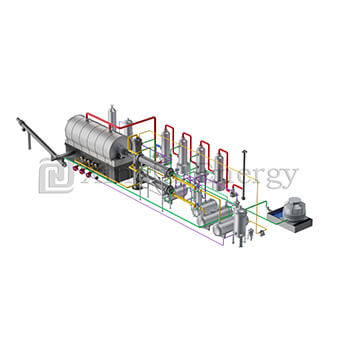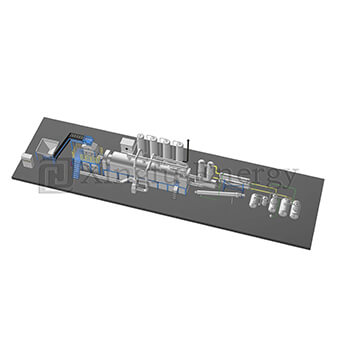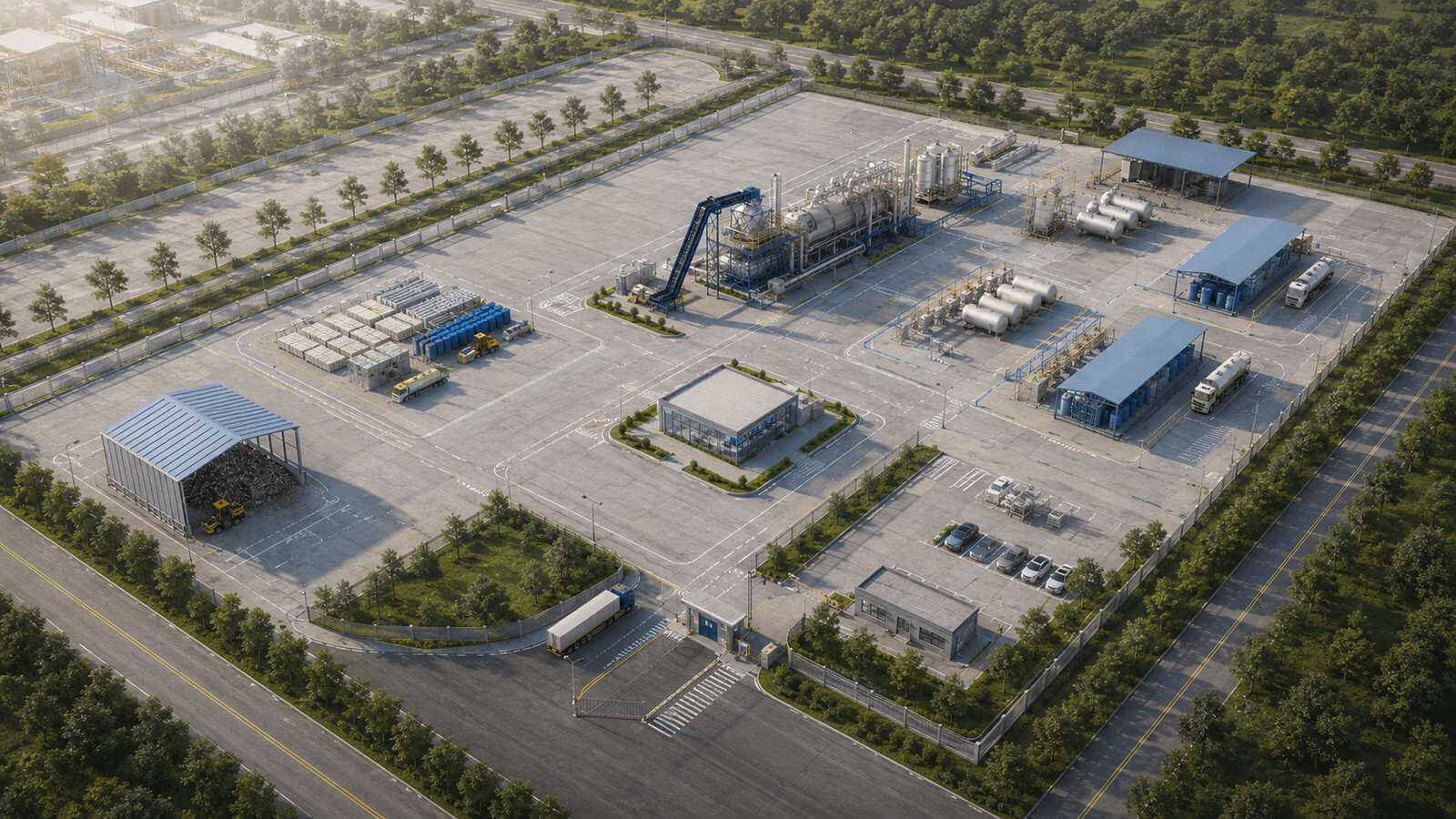
A 30T fully continuous pyrolysis plant is a highly advanced industrial equipment which can turn waste tires and plastic into fuel oil, carbon black and combustible gas through pyrolysis process at high temperature. The processes of pyrolysis can enable us to turn the non-biodegradable waste into the green energy. The optimized plant layout is a critical factor in achieving the maximum efficiency of the plant and safe operation. An effective layout can improve work flow and minimize the time required for maintenance, while meeting the environment protection requirements.
Before designing a fully continuous pyrolysis plant it is important to take a few important factors into consideration in order to guarantee the safe and adequate operation of such plant in the long run as well as to comply with all applicable laws and regulations.
Picking a suitable site for your factory is the biggest part of your factory planning. You have to measure your land in terms of your 30T production capacity and the total surface area of all of your pieces of equipment. You will need to allow for the storage of raw materials as well as for your completed production all as well as allow for adequate space for the movement of vehicles in order to be able to facilitate your logistics. You must also be near the basic services such as a water supply and the power supply as well as a transport link in order to be cost effective and easily accessible.
In planning a plant layout, environmental guidelines should be a major factor in designing the layout. Adequate space should be allocated for installation of pollution control equipment, wastewater treatment units and solid waste management facilities. Environmental protection laws in local areas require that maximum is done to keep emissions to a minimum by providing proper ventilation and using filters. Safety considerations also need to be taken into account. Adequate exit doors should be designed, fire prevention measures installed and adequate space maintained between very hot processing units to minimize the risk of any accidents.
The core equipment are arranged in such a way as to achieve a continuous process, maximize energy usage and facilitate maintenance in fully continuous type waste tyre (plastic) pyrolysis plant.
Pyrolysis reactors are to be placed in the center of the production area in order to achieve the best possible material flow through the feeding, processing and discharge area. This way the transport path of the pre-treated material to the pyrolysis reactors is kept as short as possible in order to save energy while maintaining the quality of the feed material. The feeding system must allow for easy access for the operators in order to inspect and maintain the system. This should be possible without having to stop production.
Condensers should be installed in a position close to the reactors to avoid heat losses during the transfer of gases through pipelines. By positioning the condensers close to the reactors, higher efficiency of the oil yield is achieved by maintaining an optimal temperature for the condensation process. The storage tanks for the oil must be positioned at a safe distance from areas where high temperatures are present and be equipped with safety barriers to prevent any fire. Ample space must also be reserved for the cooling water circulation system which ensures that the condenser is able to operate properly even under variable loads.
The auxiliary systems of a process support the main process and enhance energy recovery and emission control.
Heat exchangers are introduced to recover residual process heat from flue gases generated during pyrolysis. This recovered heat can be used for preheating of feedstocks as well as for maintaining the temperature in the reactors. Boilers or heat exchangers should be placed close to the corresponding process sections to allow for an efficient thermal energy transport.
Dedicated areas must be demarcated for the air treatment equipment, such as desulfurization towers, scrubbers and/or filter systems with activated carbon which are used for cleaning exhaust gases prior to their release into the atmosphere. In addition, exhaust ducts must reach the minimum height as stipulated by the relevant environmental authorities in order to effectively divert the cleaned air away from the working area.
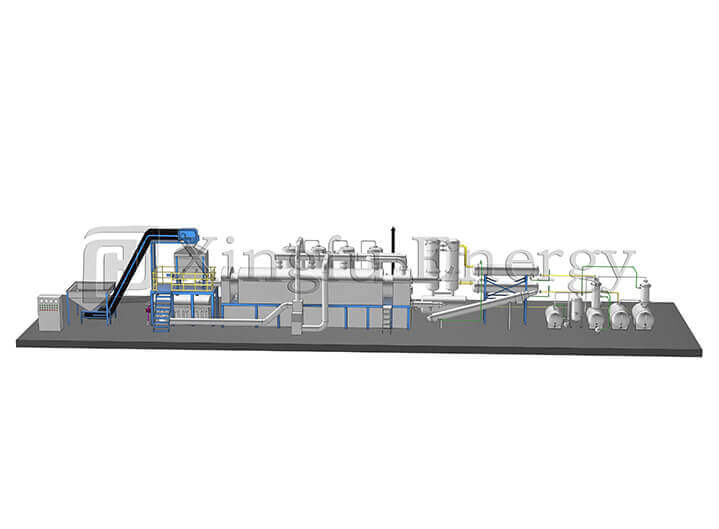
An efficient logistics flow ensures that materials are moved smoothly through the various production steps without getting stuck or contaminated in between.
Clear entry points should be designated for the unloading of waste tyres or plastics delivered by trucks. These materials are transported by trucks to the recycling facility. By using a conveyor belt or an automated feeding line to transport the materials to the required shredding or feeding unit in an efficient manner and in the minimal amount of time required to complete the manual handling involved, the materials can be effectively processed in the facility.
To ensure the safety of all finished oil storage tanks they should be physically separated from the production areas by means of a fireproof barrier or by a containment wall. Access routes to the storage tanks must be designed in such a way that tanker trucks as well as containers for dispatching products of all kinds can drive in without any problems. The design must also fulfill all the requirements of the hazardous material transport legislation.
The integration of automation allows for greater precision within each process step. In addition, it enables us to produce on a continuous large scale basis while reducing the error rate caused by humans.
Control rooms for centralized operator control should be located such that the operators have a good view of the relevant process zones. During the design phase, the electrical wiring channels and communication lines should be included in the design to avoid having to do extra work when installing automation hardware.
Real time monitoring of critical process parameters such as temperature, pressure, gas analysis, and flow is facilitated by the installation of sensors at strategic points on plant equipment and instruments. Sufficient space around plant equipment and around process lines allows for servicing of individual items of equipment without interruption to other areas of the process.
Qingdao Xingfu Energy is a leading manufacturer of renewable energy equipment, specifically of the high-end waste tyre (plastic) pyrolysis plants. All of our pyrolysis plants are of fully continuous design and are equipped with the latest automation technology. Our engineering team provides our clients with customized design of the plant layout to fit their individual site. We also offer after sales service, including installation, operator training, spare parts supply and technical service all over the world. For this reason Qingdao Xingfu Energy is your ideal business partner for any kind of sustainable recycling project.
Factory layout planning plays critical roles in achieving high productivity, safety and environmental responsibility for a 30T fully continuous pyrolysis plant project. Land with sufficient space for plant layout should be selected first. Core equipment shall be arranged in logical sequence to form a smooth production flow. Auxiliary systems shall be integrated into main equipment efficiently to maximize heat recovery and to control emissions effectively. Plant layout with clear material flow routes shall be planned for efficient material handling. Automation features shall be incorporated into the planning from the very beginning to optimize material flow and to improve plant efficiency. The whole planning process shall be carried out in close cooperation and communication with suppliers experienced in design and operation of pyrolysis plants, such as Qingdao Xingfu Energy, to achieve best possible economy while meeting sustainability objectives.
A 30T plant generally requires around 4,000–6,000 square meters depending on layout complexity, auxiliary systems included, and local regulatory spacing requirements.
The detailed layout design phase will typically last 2–4 weeks after the site details, utility details and process details for the client have been confirmed.
Yes. The modular design of the units allows for future expansion by reserving additional space during the planning phase for future additional units such as reactors or auxiliary units. This can be done without any interference to the existing operation.
 Address: 30th Floor, Building 3, Excellence Darongcheng, Shibei District, Qingdao City, Shandong Province
 Call us now:+86-13791972057
 Email:[email protected]


QINGDAO XINGFU ENERGY EQUIPMENT CO.,LTD