If you run a waste tire or plastic recycling business, picking the right pyrolysis setup can decide whether you make good money or just scrape by. Fully continuous systems, semi-continuous units, and old-school batch plants all turn scrap into fuel oil, carbon black, and steel wire. But they work in pretty different ways. Those differences hit hard when you look at daily output, how many workers you need, your energy bills, and what you actually earn over time.
A lot of investors ask the same thing right away. Which option really pays me back faster? Let’s walk through the details with real numbers and what actually happens on the ground. That way you can choose what fits your size and plans.
Batch pyrolysis runs like a giant pressure cooker. You fill the reactor with tires or plastics. Then you heat it, let it cook for 16 to 20 hours, cool it all down, take out the products, and start again. Most setups handle between 1 and 10 tons per day. You can get started for about $85,000.
This type feels pretty straightforward. Many small operators pick it because the upfront cost stays low and you don’t need fancy pre-processing for whole tires. Still, the constant stopping and starting wastes time and cash. Every single day you lose hours just reheating everything from scratch. You also need more people since feeding and unloading happens by hand. Over a full year those repeated heat-ups and cool-downs add up fast. They raise your energy use and wear out parts quicker.
Semi-continuous pyrolysis sits right in the middle. These plants improve on the batch idea with better feeding and hot slag discharge. You skip full cooling between some cycles. One unit can often finish three batches every two days. Capacity usually falls between 10 and 30 tons per day. Investment starts near $220,000.
Automation helps cut some of the heavy work. Screw conveyors move material in, and you often run with just one or two operators per shift. Even so, the reactor still goes through some temperature swings. That creates a little energy loss and a bit more maintenance than a true nonstop system. It works well for mid-sized operations that want better speed than batch but aren’t ready to jump all the way to full automation.
Fully continuous pyrolysis flips the whole process. Material goes in automatically at one end while finished products come out the other—around the clock, day after day. You don’t cool the reactor every cycle. A solid system can keep running steadily for up to 45 days before planned maintenance. Capacity starts at 30 tons per day and scales easily past 100 tons. Initial cost begins around $350,000, depending on exact size and extras.
The big win shows up in the little things. Hot air circulation plus a low-temperature catalyst keeps temperatures stable. Syngas from the process loops back to heat the furnace, so after startup you barely burn any extra fuel. Labor drops to just one or two people watching the controls. Emissions stay under control with multiple treatment steps and often meet tough standards without extra headaches.
Here’s a clear side-by-side look at how the three stack up:
| Aspect | Batch Pyrolysis | Semi-Continuous Pyrolysis | Fully Continuous Pyrolysis |
| Daily Capacity | 1–10 TPD | 10–30 TPD | 30–100+ TPD |
| Investment (starting) | ~$85,000 | ~$220,000 | ~$350,000 |
| Labor Requirement | 2–3+ people, high intensity | 1–2 people | 1–2 people, mostly monitoring |
| Energy Use | High (daily heat/cool cycles) | Medium (some cycling) | Lowest – 30-40% savings vs semi-continuous |
| Continuous Run Time | 16–20 hours then stop | Multiple cycles over 2 days | Up to 45 days nonstop |
| Automation Level | Low | Medium | High (automatic feed & discharge) |
| Best For | Small startups, limited capital | Growing mid-size operations | Large-scale, high-volume recycling |
The numbers paint a clear picture. Fully continuous systems save a lot on energy because they skip all that repeated heating and cooling that batch and semi-continuous plants go through. Real-world experience shows those savings can reach 30 to 40 percent compared with semi-continuous models. Over many months that difference turns into real money.
Picture a plant handling 50 tons of waste tires every day. A batch setup would need several units running in shifts, each one cooling and reheating constantly. Downtime piles up fast. But a single fully continuous line moves the material smoothly. Oil quality stays steady and operators don’t wear out as quickly.
Your best choice depends on how much waste you can feed each day in real life.
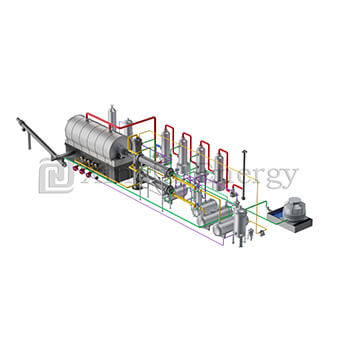
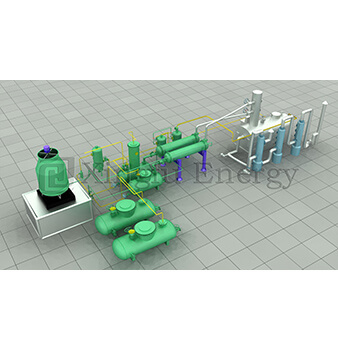
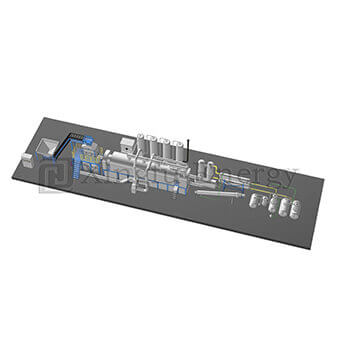
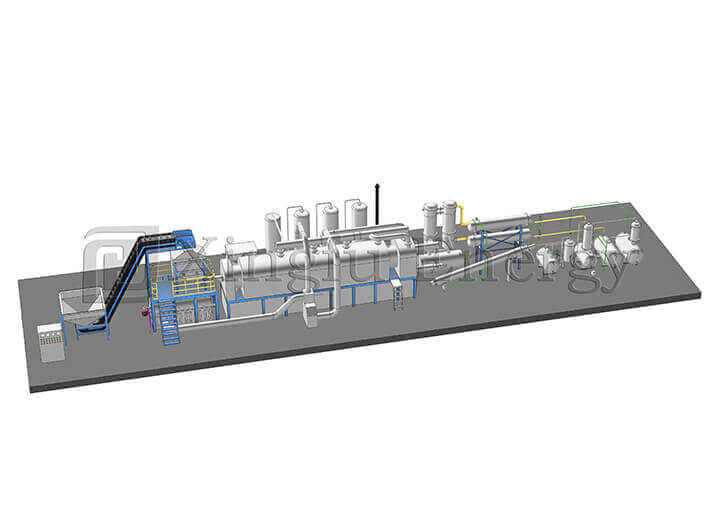
Look at the 15T fully continuous waste tyre/plastic pyrolysis plant as a real example. Even at 15 tons, it already shows the advantages. Shredded tires move by conveyor into the rotating reactor. Oil gas passes through several condensers so you capture more fuel. Carbon black and steel wire come out automatically and separate cleanly. After startup the system runs mostly on its own syngas—no extra fuel needed. Labor stays at just 1–2 people. The anti-coking design and hot air circulation keep everything running smoothly for long stretches.
For a company dealing with growing piles of urban waste or old tires, this plant turns steady feedstock into reliable income from fuel oil, carbon black, and scrap steel. At the same time it keeps environmental rules easier to meet.
Beyond daily numbers, think bigger. Demand for pyrolysis oil and recovered carbon black keeps growing as more industries look for circular options. A fully continuous plant lets you expand without buying extra separate units or fighting constant restarts. Steady output quality helps you build better relationships with buyers. Less downtime simply means more tons processed every year.
Sure, no technology fits every situation perfectly. If your waste supply changes a lot or money stays really tight, batch or semi-continuous might work better as a first move. But for anyone thinking five or ten years ahead, the efficiency of fully continuous systems often leads to the highest overall return.
Qingdao Xingfu Energy Equipment Co., Ltd. brings real experience to this field. The company started in 2010 in Qingdao, Shandong Province. It focuses on industrial boilers, pressure vessels, and advanced waste tires and plastics pyrolysis systems. They work from a 70,500 square meter facility and have a team that includes skilled engineers and certified welders. Their equipment meets CE and ISO9001 standards. The lineup covers batch, semi-continuous, and fully continuous pyrolysis plants plus oil distillation systems. Products now reach customers in more than 30 countries and earn good feedback for solid performance and engineering quality.
Choosing between batch, semi-continuous, and fully continuous pyrolysis comes down to matching your daily capacity, available capital, and operating goals with the right technology. Smaller players may begin with something simple and upgrade later. Mid-sized operations often find a good balance with semi-continuous systems. But for serious volume and lasting profitability, fully continuous technology stands out. It brings lower costs per ton, higher uptime, and better overall returns. Take time to map out your expected daily tonnage and run the numbers carefully. The right call today can grow into strong, steady profits for years to come.
Fully continuous systems run nonstop for weeks with automatic feeding and discharging. Semi-continuous plants still involve some cycling and temperature changes. This makes fully continuous setups more energy efficient. They often save 30-40% on energy compared with semi-continuous models.
For operations processing 30 tons or more per day, it usually is. The savings in labor, energy, and downtime help recover the extra upfront cost within the first couple of years. Smaller operations might see better short-term returns with batch or semi-continuous options.
Many well-designed fully continuous plants can operate steadily for up to 45 days before scheduled maintenance. This long run time keeps output consistent and cuts overall operating costs.
Fully continuous systems typically require only 1–2 operators to monitor automated controls. Batch plants need noticeably more staff.
Yes. The 15T fully continuous waste tyre/plastic pyrolysis plant processes shredded tires and suitable plastics efficiently. It produces fuel oil, industrial carbon black, and steel wire through a sealed, automated process.
 Address: 30th Floor, Building 3, Excellence Darongcheng, Shibei District, Qingdao City, Shandong Province
 Call us now:+86-13791972057
 Email:[email protected]


QINGDAO XINGFU ENERGY EQUIPMENT CO.,LTD