If you run a used oil collection service, you know how fast things can change. One year you’re hauling a few hundred gallons a week from local shops and fleets. Next thing you know, contracts pile up, regulations tighten, and suddenly you’re scrambling for more capacity. Jumping straight to a huge plant feels risky—big upfront cost, long payback, and what if the volume doesn’t stick? That’s where the 10 T Oil Distillation Plant comes in. It’s built to start small but scale smart. You process 10 tons per day right out of the gate, turn waste into sellable fuel products, and later add modules when your collection network grows. Low entry barrier. Real growth path. Let’s break it down.
Used oil doesn’t sit still. Garages, trucking companies, manufacturing plants—they keep generating it. In the U.S. alone, roughly 1.3 billion gallons get collected yearly, and the global waste oil recycling market is pushing toward $20–25 billion by the early 2030s with steady 6–7% annual growth. Collectors who recycle on-site capture more margin than those who just haul and sell raw material.
But scaling hurts if you’re locked into oversized gear. A big continuous plant might demand millions upfront and a steady 50+ tons daily just to break even. Miss that volume? You’re bleeding cash on idle equipment. Many operators start with 5–15 tons per day setups for exactly that reason. The 10 T Oil Distillation Plant hits that sweet spot. It handles 10 tons daily—enough to process collections from a mid-sized regional route—while keeping capital reasonable and footprint manageable.
Picture a collector in the Midwest. They begin with contracts from 40–50 auto shops and a couple of small fleets. At first, 8–10 tons a day feels right. They install the unit, start producing high-quality diesel-range fuel, and sell it locally or to blenders. Revenue covers the note quickly. Two years later, they land a big industrial account. Volume jumps to 18–20 tons. Instead of buying a whole new plant, they add parallel modules or upgrade downstream units. Business grows without a total reset.
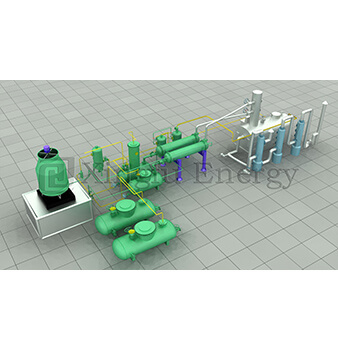
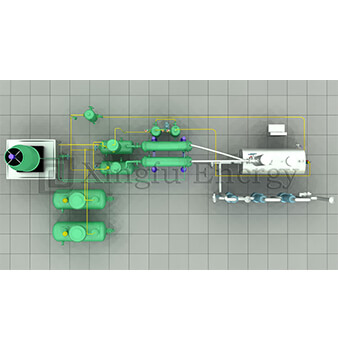
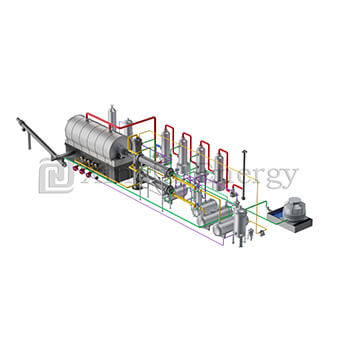
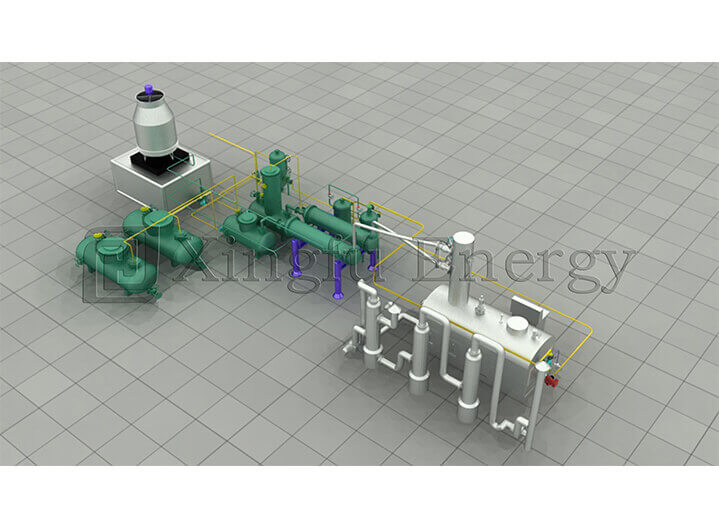
This isn’t a generic still. The XFZL–10 model from Qingdao Xingfu Energy runs at normal pressure with circulating hot air heating—no direct flame on the reactor walls. That cuts coking, extends equipment life, and improves safety. Working temperature stays under 650°C. Power draw is modest: total installed 36 kW, running about 15 kWh. Fuel can be fuel oil, natural gas, or LPG—whatever’s cheapest in your area.
Process flow is straightforward. Dewatered waste oil goes into the reactor. Heat vaporizes the hydrocarbons. Vapors pass through a catalyze tower, cool in condensers, and separate into petrol (15–20%), diesel-range oil (70–75%), light flammable gas (2–5%), and residue (10–18%). Overall oil yield hits around 90%, with near-100% conversion of the feedstock.
Installation stays simple. Many setups fit on a concrete pad with basic utilities. No massive civil works required compared to larger continuous systems.
The real edge shows when your business expands. The 10 T unit isn’t isolated—it’s part of a lineup that includes 20 T and larger models. Operators often run multiple 10 T units in parallel. Need 20 tons daily? Install a second one beside the first. Piping, controls, and storage tanks can share infrastructure, cutting incremental cost.
Some go semi-continuous by staging batches. Others add polishing modules later—extra filtration, clay treatment, or vacuum stages—to push product from fuel-grade to higher-value base oil specs. The core reactor stays the same; you build around it.
Real example: A Southeast collector started with one 10 T unit in 2022. Collected from workshops and small manufacturers. Sold diesel locally to generators and boilers. By 2024, volume doubled after adding fleet contracts. They installed a second 10 T unit, linked the condenser trains, and shared the exhaust gas burner. Capacity doubled. Extra capital was maybe 60–70% of a brand-new standalone plant. Payback stayed under 18 months on the add-on.
Contrast that with rigid big plants. Lock in 30 tons/day design, but only hit 15 tons? You’re running at half efficiency, high unit costs, and slow ROI. Modular thinking flips that risk.
| Scale Stage | Daily Capacity | Typical Setup | Investment Approach | Risk Level |
| Startup | 8–12 tons | Single 10 T Oil Distillation Plant | Lower entry cost, quick cash flow | Low |
| Mid-Growth | 15–25 tons | 2× 10 T units + shared utilities | Add one more unit, reuse infrastructure | Medium |
| Established | 30+ tons | Multiple 10 T or step to 20 T model | Phased expansion, proven ROI | Managed |
This phased path matches how most collection businesses actually grow—gradual, contract by contract.
Start turning waste into revenue sooner. A 10 T plant can produce 7–7.5 tons of good diesel-range fuel per day. At current prices, that’s meaningful income while you build volume.
Safety and uptime matter too. Hot air heating reduces hot spots and coke buildup. Flammable gas gets routed through treatment and back to the burner—less waste, lower emissions.
Maintenance stays predictable. No exotic parts. Local technicians handle most service. Downtime is measured in hours, not weeks.
And the green angle helps win contracts. Many fleets and plants prefer partners who recycle responsibly. Showing you distill on-site with high yield and low residue builds trust.
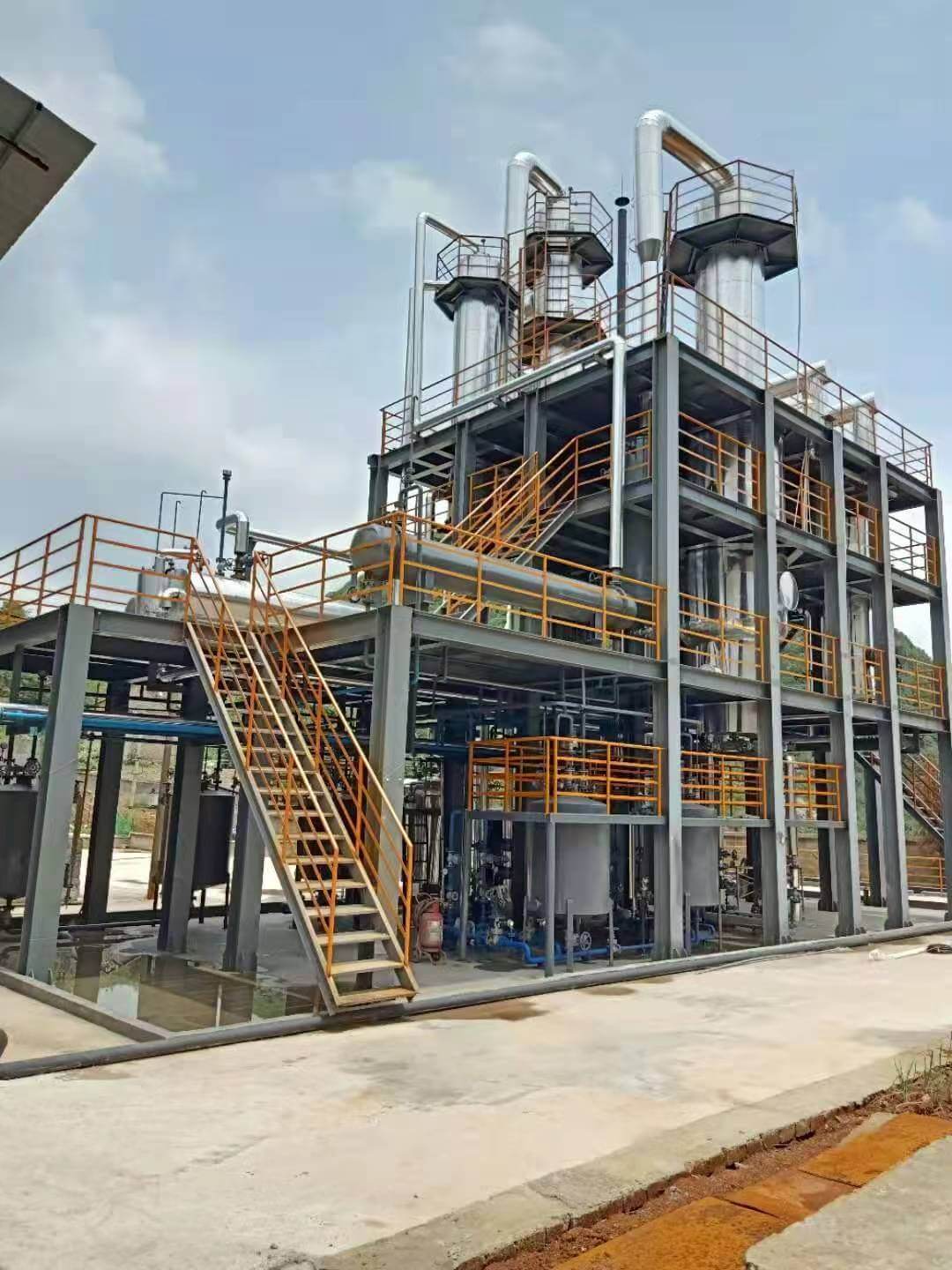
Qingdao Xingfu Energy has been building this kind of equipment since 2010. They specialize in industrial boilers, pressure vessels, and waste tires & plastics pyrolysis systems. CE and ISO9001 certified, plus A-level boiler and pressure vessel licenses. Their gear ships to over 30 countries. Factory covers 70,500 square meters with a strong engineering and welding team. When you buy the 10 T Oil Distillation Plant, you’re getting proven manufacturing focused on reliable, practical recycling solutions.
Growing a used oil collection business doesn’t have to mean betting the farm on oversized equipment. The 10 T Oil Distillation Plant gives you solid daily capacity—10 tons—with high yield and smart design. More important, its modular nature lets you add units or upgrade downstream as collections increase. Start small, prove the model, generate cash flow, then scale confidently. That’s how many operators turn a local hauling operation into a regional recycling powerhouse. If your volumes are creeping up but you’re hesitant about big commitments, this approach deserves a close look.
The 10 T Oil Distillation Plant is rated for 10 tons per day of waste oil feedstock. Most operators hit 8–10 tons reliably, depending on oil quality and dewatering prep.
Yes. Many users run multiple 10 T units side by side to double or triple capacity. Shared utilities, piping, and storage make adding another unit far cheaper than buying a completely new larger plant.
You typically get 70–75% diesel-range fuel, 15–20% petrol fraction, and low residue. The hot air heating and tailored catalyst help produce cleaner, higher-value outputs suitable for industrial fuel or further refining.
It lowers the initial investment compared to bigger plants. You can start turning waste into revenue quickly with manageable daily volumes. When collections grow, add parallel units without scrapping your existing setup—keeping payback periods short.
Absolutely. It’s designed for waste oil, plastic pyrolysis oil, tire oil, and residual oils. As long as you dewater properly upfront, it processes mixed feedstocks effectively.
 Address: 30th Floor, Building 3, Excellence Darongcheng, Shibei District, Qingdao City, Shandong Province
 Call us now:+86-13791972057
 Email:[email protected]


QINGDAO XINGFU ENERGY EQUIPMENT CO.,LTD