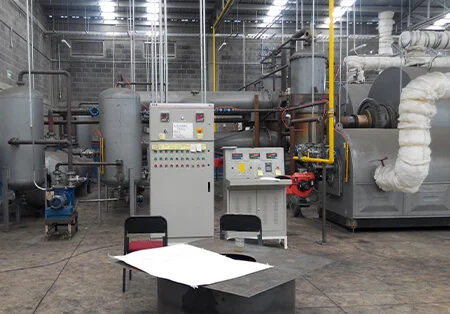
Ever thought about running a device that changes junk into gold? Imagine this: a semi-continuous pyrolysis plant working steady. It turns old tires and plastics into handy fuel oil, carbon black, and extra stuff. This isn’t plain recycling—it’s clever tech making everything easier and simpler. In this piece, we’ll walk you through a usual day at one of these spots. We’ll zero in on how automation keeps it all ticking like a watch. If you work in trash handling or want to fix green issues, read on. You’ll spot why these rigs can shift the game.
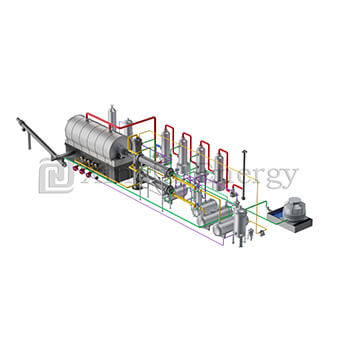
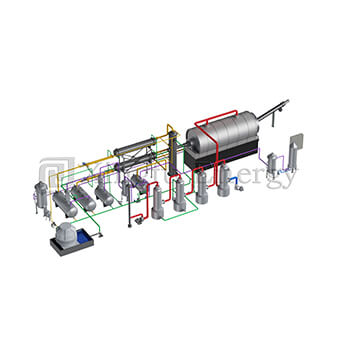
As the sun rises, the staff—usually just two or three people—arrives on site. No need for a huge team; that’s one of its big perks. What’s first on the agenda? A quick plant inspection. This isn’t some clunky old machine. Take XingfuEnergy’s 10-ton semi-continuous waste tire/plastic pyrolysis plant as an example—it’s an integrated design with no need for a prefabricated foundation. Just set it in place, plug in the power, and it’s ready to go in no time.
Hit the switch, and the hot air circulation heating system kicks in. Why hot air? It distributes heat evenly inside the reactor, cutting fuel use—about 200 kg per run—and lowering costs. Workers load tire shreds (no bigger than 50 mm) onto the conveyor belt. No heavy lifting; the belt handles it. The automation system takes care of airtight high-temperature feeding, sealing everything tight to save heating time and minimize temperature loss. By mid-morning, the reactor hits 650°C, operating at normal pressure. No explosions or mess—the steam purging system keeps flames in check.
Think about it: old batch-style plants meant constant shutdowns and restarts, wasting tons of time. Here? Semi-continuous means you can keep feeding without a full stop. One operator monitors the gauges, while another grabs a coffee. It’s that straightforward.
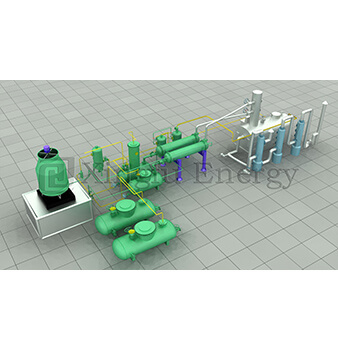
Noon comes, but the plant keeps going. Inside the reactor, built from tough Q345R steel, the wonder occurs. Old tires or plastics split at high warmth without air, so no flames. The oil and gases that result go through a gas-fluid split tower. They chill in the cooler, becoming fuel oil that heads to hold tanks. Oil output lands at 40-45%—good figures that build real earnings fast.
Automation stands out here. The setup uses many-stage chilling to pull out each bit of oil. No hand changes required; sensors and knobs manage it. At the same time, rough carbon black and steel wire leave via the auto discharger. See this: they glide into a chill lift, then reach the magnet splitter. Steel wire goes one way, carbon black the other. Next, carbon black gets crushed and turned into factory-level stuff—output 32-36%—while steel wire is packed for junk sale.
What about burnable gases? They’re not tossed. A suck pump draws them through a sulfur remover tank, then into a water lock, and back to the hot air oven. It’s a shut-circle loop—neat and kind to nature. With sealed slag exit, no dirt floats around the area. Crew? They’re mainly eyeing the panel, perhaps turning a knob once in a while. Full plant power hits 85 kW, but working power is only 40 kW/h. This holds electric costs fair. From what I’ve heard, in a lively recycle yard, one plant deals with 10 tons of junk daily. It runs even and flips dump-bound garbage into money.
As the day wears on, products stack up. Fuel oil holders fill, carbon black sacks pile high, and steel wire packs are set for pickup. Automation holds the make speed constant, no jams. The magnet splitter by itself saves loads of hand sorting time. And the chill lift? It shifts hot items safe without hurts or drops.
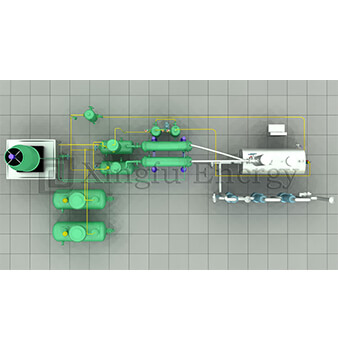
Tidy-up is simple too. No big fixes—just usual looks. The plant’s build—7300 mm long, 2400 mm wide, 3100 mm tall—fits in a 25000 mm × 5500 mm spot, with setup height up to 5000 mm. It’s small and quick. By evening start, the day’s lot is finished. Outputs counted: steel wire 14-16%, syngas 5-8% reused for more. Crew notes the info, ready for next day’s fixes. Breaks? Hardly any. These plants hold for 5-7 years with right care. They pay back costs swift through side sales.
Here’s a table on get-back rates to show you a better view of the worth:
| Product | Recovery Rate |
| Fuel Oil | 40-45% |
| Carbon Black | 32-36% |
| Steel Wire | 14-16% |
| Syngas | 5-8% |
These aren’t mere numbers—they spell real gains. One worker told that moving to semi-continuous tools slashed their work costs by half. It let them aim at growing big instead of watching gadgets.
Dusk falls—time to turn off. Automation makes this basic too—slow cool-down, auto knobs close gas paths. Crew does a last walk: look for drips, clear bits. No night fears; fire blockers and seals hold things secure.
Glancing back at the day, it’s obvious pyrolysis gear has advanced far. What was once messy, weary tasks needing many helpers is now easy going with bright tech. Less fuel used, more made, fresher air. If you’re looking at junk-to-power, this rig gets you there simple.
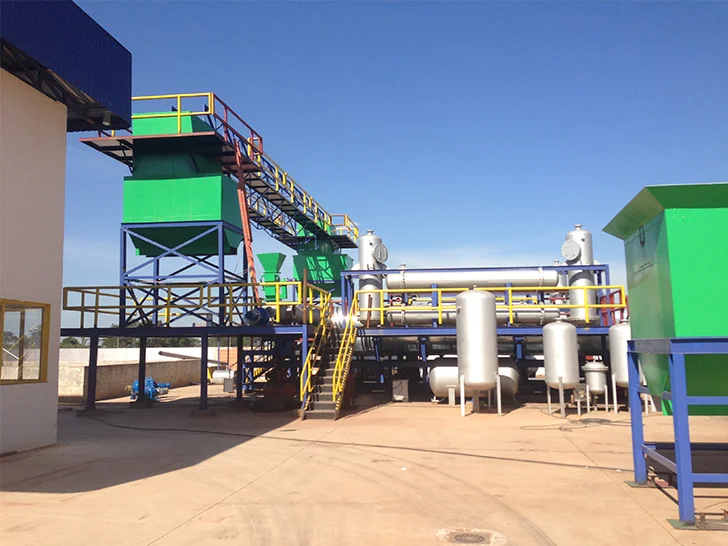
Before ending, let’s highlight the champs behind these dependable devices. XingfuEnergy, based in Qingdao since 2010, has conducted very in-depth research in the field of pyrolysis technology.They focus on old tire and plastic handling setups, mixing boiler skills with pressure pot know-how. With a solid R&D group and many stamps, their tools go to over 30 lands. They provide tough, quick gear made for your wants—whether 10-ton level or larger. They’re not mere dealers; they’re buddies changing junk troubles into chances.
To sum up, a day in a semi-continuous pyrolysis plant reveals how automation eases work—from kick-off to close. It’s quick, cheap, and green. It turns daily junk into useful items. If you’re in recycle, think how this tech can smooth your tasks and lift earnings.
What’s a typical day like in a semi-continuous pyrolysis plant?
It begins with fast kick-off and adding via belt. It shifts to pyrolysis with automation dealing heat and split. Then, it gathers outputs and closes easy. Just 2-3 workers hold it steady. They handle up to 10 tons of old tires or plastics each day into fuel oil and more.
How does automation simplify operations in a semi-continuous pyrolysis plant?
Automation handles sealed adding, discharging, magnet split, and gas get-back. It trims hand work and slips. It saves hours, drops costs—just 200 kg fuel each cycle—and ensures steady warmth for better outputs. This makes tasks carefree.
Can a semi-continuous pyrolysis plant handle tires and plastics effectively at the same time?
Sure. It’s built for items up to 50 mm. It deals with tires or plastics at up to 650°C. It gives 40-45% fuel oil and other sides. Automation makes changes smooth, no big shifts needed.
What are the main benefits of using automation in pyrolysis operations?
Top pluses include less crew (just 2-3), lower power use via hot air flow, and neater dealing—no dirt or drips. Also, it lifts get-back rates. It turns junk to gains quicker.
How long do semi-continuous pyrolysis plants last, and what’s the maintenance like?
With usual checks, they go 5-7 years. Upkeep is basic—daily info notes, rare knob turns—thanks to strong makes and automation that cuts wear.
 Address: 30th Floor, Building 3, Excellence Darongcheng, Shibei District, Qingdao City, Shandong Province
 Call us now:+86-13791972057
 Email:[email protected]


QINGDAO XINGFU ENERGY EQUIPMENT CO.,LTD