Hey, if you’re looking into the waste recycling business—especially turning scrap tires and old plastics into real money—you’ve likely come across pyrolysis technology. Imagine huge piles of worn-out tires sitting in dumps. Or rivers clogged with plastic junk. Now picture flipping that mess around. You heat it up without oxygen and pull out fuel oil, carbon black, and even steel wire. That’s pyrolysis at work. Right now, energy costs keep climbing. Green rules get stricter every year. So picking the right reactor isn’t just clever. It’s how you lock in solid profits heading into 2026. We’re comparing semi-continuous versus batch systems here. Lots of investors like you want to know which one actually boosts returns without endless headaches. Let’s walk through it plainly so you can figure out what fits your plans.
The market is growing fast. Waste tires pile up by the billions every year. Plastics? Production tops 400 million tons annually, yet most still ends up in landfills or oceans. Pyrolysis steps up as a practical fix. It heats waste in a sealed environment and breaks it down into sellable products—oil for fuel, carbon black for making new tires or pigments, and syngas to power the plant itself. By 2026, the pyrolysis equipment sector should easily pass $500 million. Bans on dumping waste keep spreading. Governments offer incentives for recycling loops. That drives demand higher.
But here’s the real point. Not every reactor performs the same. Batch setups are the classic choice—simple and straightforward. You fill the chamber, run the heat cycle, let it cool, then empty it out. Semi-continuous takes things further. It’s like a halfway step toward full automation. You add material while the reactor stays hot. No complete shutdowns needed. For anyone serious about returns, the key differences show up in daily running time, fuel savings, and overall payback speed. A good 20T semi-continuous waste tyre/plastic pyrolysis plant often stands out as the smarter pick for folks who want growth without jumping straight to massive continuous lines.
Batch pyrolysis feels a lot like an old reliable truck. It gets you from point A to point B without much fuss. You load tires or plastics into the reactor. Heat climbs to roughly 450-650°C. The process runs its course. Then everything cools down before you unload. Pretty basic.
It works well for smaller operations. Upfront costs stay reasonable—usually $500,000 to $1 million for a decent 10-20T unit. Beginners find it easy to handle. No complicated controls. Just three or four workers on shifts. Suppose your supply of waste comes in fits and starts. A rural yard, maybe. Batch lets you process whatever shows up when it shows up. You can turn 20 tons of tires into roughly 8-9 tons of oil in a day, plus carbon black and scrap steel.
Still, drawbacks pile up quickly. Downtime hurts the bottom line. Every cycle lasts 12 to 24 hours, cooling included. That eats into production hours. You burn extra energy reheating from cold each time. Crews sit around waiting for the reactor to drop temperature. Hot unloading brings risks—burns, dust clouds, messy cleanup. Older batch designs sometimes let small emissions slip through if seals wear out. Fuel use runs high—around 300-400 kg per cycle. Monthly operating expenses often hit $5,000 to $7,000 just for power and wages on a mid-sized plant. When you try to scale, the whole setup starts feeling slow and clunky.
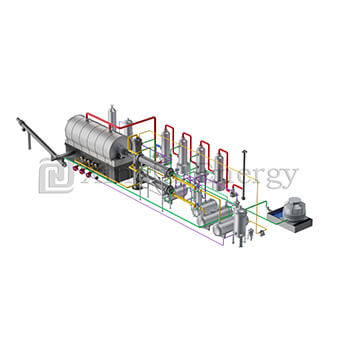
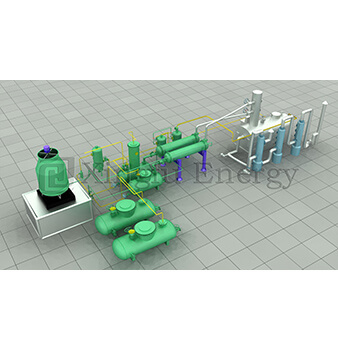
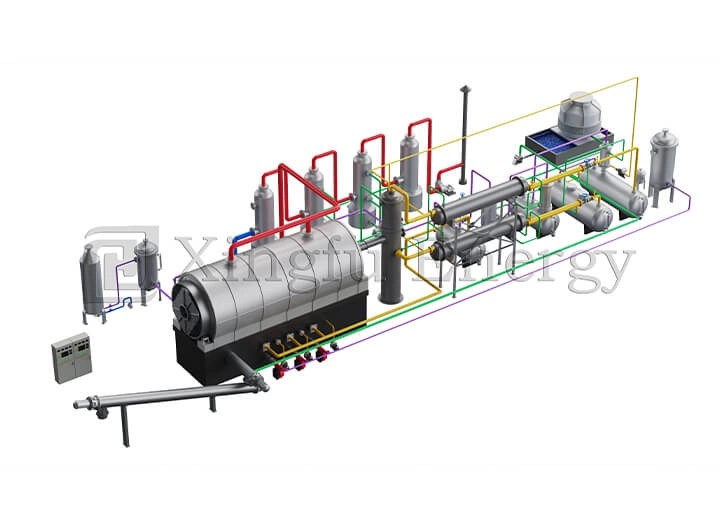
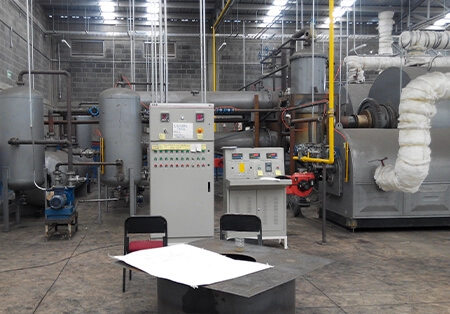
Now look at semi-continuous. Think of it as a hybrid vehicle—smooth, practical, and much easier on fuel. Material feeds in steadily while the reactor stays hot. That cuts idle time sharply. A solid 20T semi-continuous waste tyre/plastic pyrolysis plant processes 20 tons every day. Airtight feeding keeps temperatures stable. No long cool-down periods. Just keep feeding and collecting.
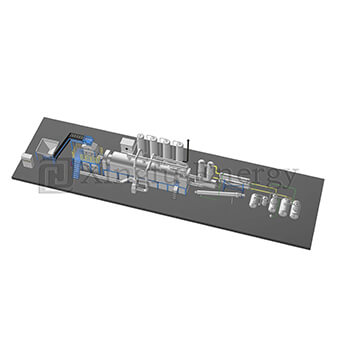
The design stands out for good reasons. Heavy-duty Q345R steel builds the main body. It runs at ≤650°C using hot air circulation. Heat spreads evenly—no hot spots that wear things out early. Installed power sits at 90kW, but actual running draw is about 35kW/h. The whole footprint measures roughly 25,000mm by 11,500mm. Installation stays simple. No giant concrete pads required. Labor needs? Still only 3-4 people. They stay busy producing instead of waiting.
Benefits hit the wallet hard. Multilevel cooling lifts oil yield to 40-45%. That’s noticeably better than many batch runs. Slag comes out hot and sealed—no dust clouds. Steam blow keeps flames in check. Syngas gets desulfurized before reuse. Picture your plant near an industrial zone. Shredded tires (cut to ≤50mm) roll in on a conveyor. Out comes oil you sell at $500 per ton. Carbon black fetches $300 per ton. Steel wire adds extra scrap value. The equipment lasts 5-7 years. Even heating means fewer repairs.
Compared with batch, semi-continuous shortens heating phases, drops fuel consumption to around 200 kg per operation, and lifts daily throughput. It sits right in the middle—reliable like batch, but profitable like bigger continuous systems. Perfect for investors ready to move up without betting the farm.
Let’s talk real numbers. Investors care about payback time above everything else. Here’s a clear comparison for typical 20T setups. We assume tires cost $50 per ton to acquire. Oil sells for $500 per ton. Carbon black goes for $300 per ton. Steel scrap brings $200 per ton. Figure 300 working days per year.
| Aspect | Batch Pyrolysis | Semi-Continuous Pyrolysis |
| Initial Investment | $800,000 – $1.2M | $1M – $1.5M |
| Daily Capacity | 20T, but with 20-30% downtime | 20T, minimal downtime |
| Oil Yield | 35-40% | 40-45% |
| Annual Revenue | ~$2.5M (oil + byproducts) | ~$3M (higher yield/uptime) |
| Operating Costs | $400,000/year (higher energy/labor) | $300,000/year (efficient heating) |
| ROI Timeline | 2-3 years | 1.5-2 years |
| Break-Even Point | After 500-600 tons processed | After 400-500 tons |
The difference jumps out. Semi-continuous pulls an extra 5% oil from each ton. That alone adds roughly $100,000 a year. Fuel prices keep rising—maybe 15-20% higher by 2026. Efficiency becomes even more valuable then. Batch suits very tight budgets or tiny starts. But anyone planning to grow sees faster returns with semi-continuous. One operator I heard about switched setups. Energy bills dropped 25%. What used to barely break even suddenly turned into steady cash flow.
Numbers look good on paper. Actual plants prove it works. A 20T semi-continuous unit in Mexico runs day after day on local tire waste. It produces export-quality oil. Operators say the system stays steady. Syngas loops back to heat the reactor—cuts outside fuel use a lot. Similar setups in Spain and Bulgaria handle mixed plastics. They turn out clean carbon black for rubber plants. Few major breakdowns. Just consistent output.
These stories aren’t hype. With worldwide pressure for zero-waste goals, plants like these often grab subsidies—sometimes 20% off the build cost in certain areas. If you’re putting money in, imagine your own site. Trucks deliver waste daily. The reactor rarely stops. Profits build steadily. It’s good for the planet and even better for the bank account.
Before we wrap things up, a quick word about Qingdao Xingfu Energy. They’ve been building solid equipment since 2010. They make industrial boilers, pressure vessels, and reliable waste tires & plastics pyrolysis systems right out of Qingdao. Over 200 skilled people work there, including sharp engineers. Gear has shipped to more than 30 countries—Malaysia, Poland, and plenty others. Certifications stack up—CE, ISO9001, the works. They focus on durable machines that perform year after year. If you’re shopping for trustworthy pyrolysis equipment, Qingdao Xingfu Energy turns waste problems into steady energy gains.
So here’s the bottom line. In the fast-moving waste-to-energy scene of 2026, semi-continuous pyrolysis usually beats batch when profit is the goal. It offers that practical middle ground—strong efficiency, easy scaling, and quicker payback thanks to better yields and far less wasted time. Batch still fits for brand-new or very small operations. But if growth matters to you, a semi-continuous setup like the 20T model could become your workhorse. Look hard at your waste supply, your budget, and your long-term plans. The math points clearly toward efficiency. Ready to take the next step? It might just change everything for your investment.
It comes down to running time and fuel savings. Continuous feeding skips long cool-down waits. That boosts daily output by 20-30%. Oil yield climbs to 40-45%. Fuel use drops to about 200 kg per run. Payback often lands under two years instead of stretching longer like batch does.
Semi-continuous does better with sealed hot slag discharge and cleaned syngas. Dust stays low. Emissions drop noticeably. Batch can be dirtier without those upgrades. Both help the environment, but semi-continuous lines up cleaner with tougher 2026 rules while still making good fuel.
Yes, especially if you plan to grow. Costs start a little higher than batch. But it runs with just 3-4 workers and fits modest sites. Real plants show fast payback from oil, carbon black, and steel sales. It works well even for mid-size players.
Semi-continuous units hold up 5-7 years. Even heating cuts wear on parts. Batch can last about the same, but frequent full cycles stress components more. Maintenance stays lighter on semi-continuous—mostly annual checks instead of constant fixes.
Start simple. Plug in your local waste cost—say $50 per ton. Add expected sales prices for oil, carbon, and steel. Count 300 running days. Subtract yearly costs around $300,000. Revenue can reach $3 million with strong yields. That often delivers 50-70% annual return. Adjust for your area’s prices. The numbers usually favor the more efficient choice.
 Address: 30th Floor, Building 3, Excellence Darongcheng, Shibei District, Qingdao City, Shandong Province
 Call us now:+86-13791972057
 Email:[email protected]


QINGDAO XINGFU ENERGY EQUIPMENT CO.,LTD